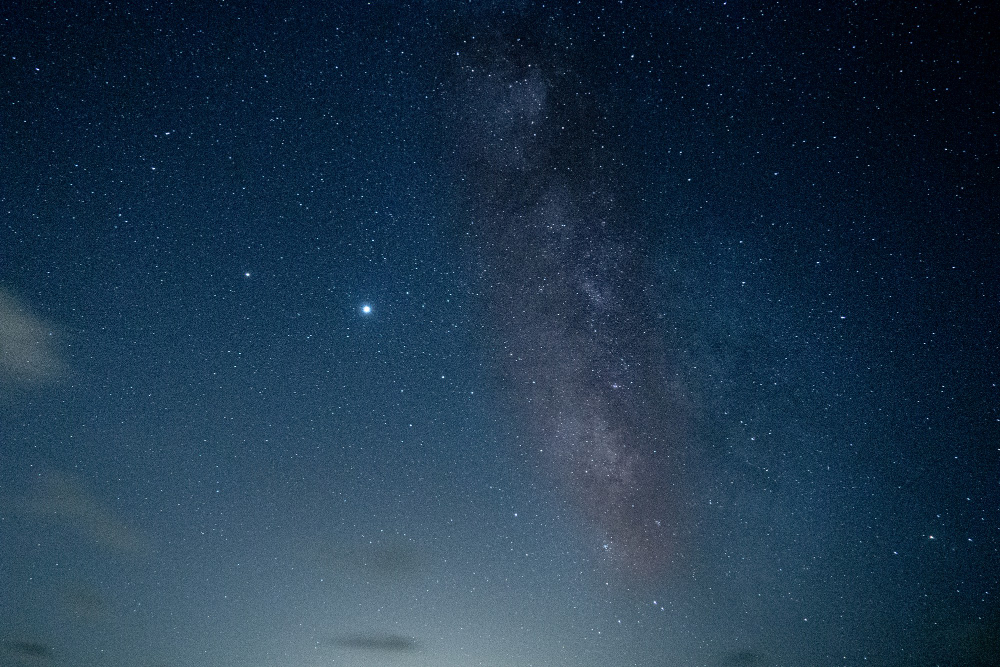
Venus has been known as the brightest of the planets in the sky. It is known by the nicknames “Evening Star” or “Morning Star,” although technically speaking, it is a planet and not a star. Its thick atmosphere reflects considerable amounts of sunlight, which is why it is such a bright planet and has been the focus of many astronomers. This popular planet has been observed by astronomers and sky watchers for centuries, developing both cultural and mythological connotations.
Which Other Names Has Venus Been Known By?
For centuries, cultures around the world have admired Venus and given it different names, based on mythology and observation. Venus’s other names are Morning Star and Evening Star; it’s also known in ancient Roman astronomy as Lucifer and in Greek traditions as Phosphorus and Hesperus. Until astronomers described planetary motion, many believed that the bright objects that appear before dawn and after dusk were not one single celestial object but two distinct bodies. Later, modern astronomy clarified that they were both the same planet in its orbit around the Sun.
Why Is Venus Called the Morning Star?
The bright shine of Venus, often visible immediately before dawn, makes it one of the brightest objects in our sky before sunrise. Why is Venus called the morning star? The question is asked because Venus appears to shine like a bright star. Venus is called the morning star when it is on the western side of the Sun from the point of view of Earth and so rises before dawn. It shines like a bright star but does not emit light on its own; it reflects sunlight to Earth.
How Can You Easily Identify Venus in the Night Sky?
Many novices are fooled into thinking that Venus is a very bright star. Venus rises in the west a little after sunset and sets in the east a little before sunrise, depending on the time of year. Unlike stars, though, Venus shines with a steady white light that does not flicker. It is usually the brightest thing in the sky after the Moon, so it is a great target for beginners.
When Can You See Venus After Sunset?
The position of Venus in the sky varies throughout the year as the Earth and Venus orbit the Sun. Whenever we see Venus in the night sky, it is at its greatest separation from the Sun in the evening. Since it is never far from the Sun in our sky, Venus can usually be seen only a few hours after sunset or before sunrise. Use an astronomy calendar to find the best viewing dates in your area.
Why Does Venus Look Like a Star?
Venus appears like a star because of its incredible luminosity and smooth surface.
Around seventy percent of the sunlight that hits its cloud layer is reflected back by Venus.
It has no fluctuations in its light because when observed from Earth, it is a disk like a planet rather than a single point of light. The planet’s unique proximity and reflectivity make it the brightest planet visible unaided.
What Makes Venus a Favorite Planet for Stargazers?
- Venus is often the first bright object to appear in the heavens after sunset or before sunrise.
- It can usually be seen with the unaided eye or with binoculars or telescopes.
- The changing position of Venus throughout the year makes it exciting to observe again and again.
- Observing Venus is a good way for beginners to see how planets move across the night sky, unlike stars.
Why Is Venus One of the Brightest Objects in the Sky?
Venus is brighter than all other planets seen from Earth because its thick cloud cover reflects a great deal of sunlight back into space. Its high reflectivity, coupled with its relatively close distance from Earth, makes Venus far brighter than many stars. In some sites with moderate levels of light pollution, the planet is easy to find without any optical aid. Its beautiful brightness and easy availability have made it a prized object for astronomers, amateur photographers, and even casual skywatchers for centuries.
What Can You Observe When Viewing Venus Through a Telescope?
Even though it looks like a bright dot to the unaided eye, a telescope shows far more about Venus. By tracking it as it orbits the Sun, observers can see that Venus goes through different phases like the Moon. At one point, it looks like a crescent; at another, it is half-full; and at another, it looks almost fully illuminated. Its very dense atmosphere, however, hides its surface—but watching its phases offers powerful evidence of planetary motion and makes Venus a fascinating subject for astronomers. For more information, connect with Night Sky Adventure.