
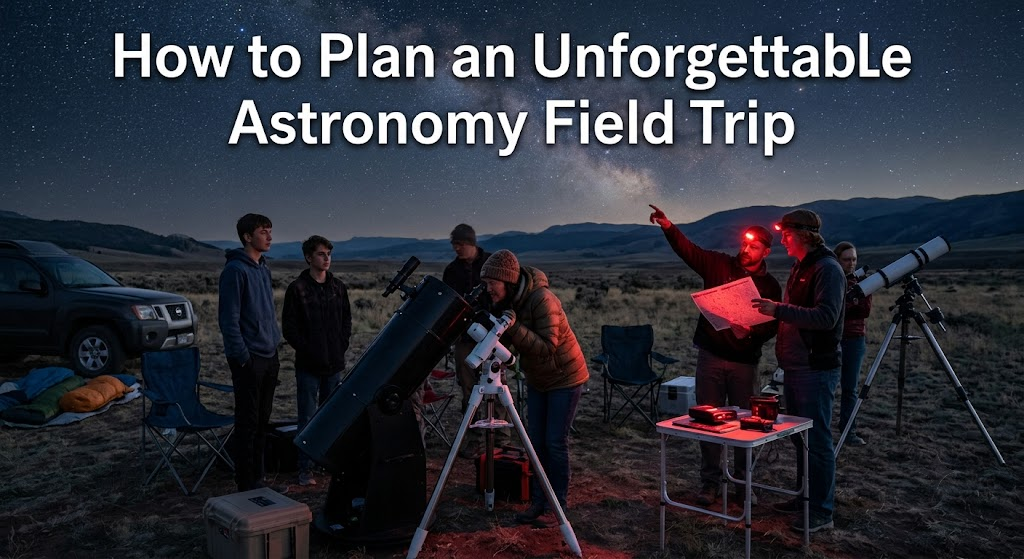
Within a few days, most field trips are forgotten. But when you show a group of students, coworkers, or family members Saturn’s rings through a telescope for the first time, that’s the kind of moment people remember years later.
The main attraction of an astronomy field trip is that it transforms an abstract concept from a textbook or a screen into an actual, physical experience. You are standing beneath the Milky Way rather than reading about it. You are actually pointing a telescope at a planet rather than learning its name from a book for an exam. A little preparation goes a long way toward making the trip truly worthwhile, whether you’re planning something for a classroom, a scout troop, or just your own family.
Why Astronomy Makes Such a Strong Field Trip Choice
Compared to many other field trip topics, astronomy has a special advantage: it doesn’t require a lecture hall to be engaging. The majority of the work is done by the night sky alone.
- It organically combines mythology, science, and history into a single experience.
- Mixed-age groups can enjoy it because it requires no prior knowledge.
- It is effective for groups of almost any size, from a few pupils to an entire classroom.
- The experience varies each time, depending on the season and sky conditions, unlike a museum exhibit.
According to educators, students are more likely to remember a real stargazing experience than a textbook diagram. The idea makes sense when a planet or star cluster is physically located, something that notebooks can never manage.
What Makes a Trip Genuinely Educational
Not every evening spent outdoors is a worthwhile educational opportunity. A memorable evening can be distinguished from one that truly teaches something by a few factors:
- An informed guide who can do more than just point out what you’re looking at
- Since viewing with the unaided eye is limited, access to actual telescopes
- A place with a dark sky because light pollution obscures most of the sky’s fascinating features.
- There should be some structure to the evening, such as a guided tour of constellations, a Q&A session, or a themed talk.
The popularity of this type of arrangement has also been steadily increasing. National parks across the nation now host special dark-sky events that combine stargazing with discussions about wildlife, ecology, and the science of natural darkness itself. These events attract audiences far beyond the typical astronomy audience.
Planning Checklist for Group Trips
A little logistical planning goes a long way if you’re planning this for a school, youth group, or organization:
- Make reservations well in advance, particularly during the busiest times of year for stargazing or during significant astronomical events.
- Verify that there is enough open space for the group and little light pollution.
- Because cloud cover or a bright full moon can reduce visibility, check the weather and moon phase in advance.
- Because group sessions often run longer than expected, bring warm clothing and seating.
- Find out if the location has telescopes or if your group must bring their own.
When a Field Trip Turns Into an Astronomy Vacation
One wonderful night under the stars is rarely sufficient for many families and travel groups. Planning an entire astronomy vacation around a single evening that combines stargazing with a more comprehensive trip to a picturesque, low-light-pollution location is frequently the result.
- National parks, wine country, and mountain areas are often great places to see the stars.
- Since weather can affect a single night, multi-day trips enable multiple observation sessions, which is important.
- A well-planned itinerary combines daytime activities like hiking or wine tasting with an evening stargazing session.
- There are even seasonal astronomy festivals in some areas that encourage tourists to plan their vacations around a particular weekend.
This type of trip tends to appeal to a variety of travelers, including small groups seeking an activity other than dining out or hiking, families seeking an educational experience for the children, and couples seeking a picturesque, low-key getaway.
Making It Work for Any Group
Part of the reason astronomy field trips are so popular in so many different contexts is that they scale surprisingly well:
- A practical science lesson is given to school groups to reinforce the material covered in class.
- Team or corporate outings provide an unforgettable experience and foster genuine camaraderie.
- Families spend time together, away from screens, and provide children with something novel to pique their curiosity about.
- Couples or single travelers can enjoy a low-cost, quiet activity that still feels authentic.
How the Evening Typically Unfolds
For anyone planning their first trip, knowing roughly what to expect helps set expectations:
- Arrive before it gets fully dark so your eyes have time to adjust.
- Expect a mix of binoculars, telescopes, and naked eye.
- A guide will usually walk through visible planets, constellations, and any notable events happening that night
- Sessions often run a couple of hours, so comfort matters as much as curiosity.
Choosing the Right Time of the Year
When making long-term plans, seasonality is more important than most people realize. While fall and winter frequently bring crisper, clearer air and longer stretches of darkness to work with, summer evenings offer warmer temperatures and later sunsets, making them easier for families and younger groups. Additionally, some months have meteor showers or other noteworthy occurrences that are worth planning a trip around. It is much more likely that your group will have a clear, unforgettable night under the stars if you check a seasonal sky calendar in advance along with local weather patterns, to help avoid cloud cover.
Book Your Trip for an Exceptional Adventure
If you’re prepared to make a night under the stars something your group actually discusses afterward, Night Sky Adventure provides guided stargazing sessions from a dedicated dark-sky observation site in Sonoma County’s Dry Creek Valley, far away from city light pollution. With proper telescopes and experienced guides available, it’s an excellent choice for travel groups, families, and classrooms. Get in touch with us to arrange an unforgettable trip for your group.